
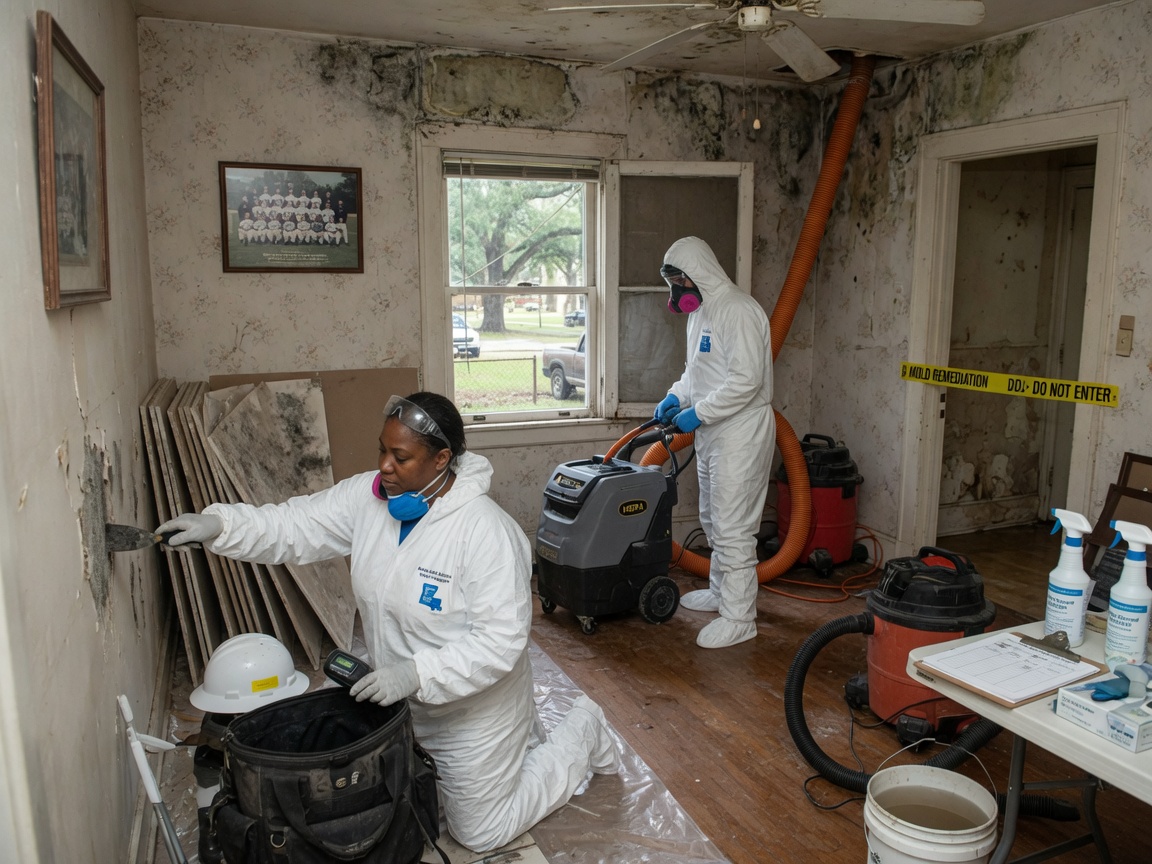
Cedar Grove was its own town before Shreveport annexed it, and the neighborhood still reads that way: a dense grid of early-1900s and pre-war frame cottages on small lots off Hollywood Avenue, Linwood Avenue and the streets running toward 70th. Almost all of it is pier-and-beam over bare soil, and much of it has had long stretches of deferred maintenance.
That combination produces the most straightforward diagnosis in Shreveport and the most expensive one to fix properly. The crawl spaces here are frequently open, torn-sheeted or bare, with grade sloping toward the house rather than away from it on lots that were cut flat. Water runs to the foundation, the soil never dries through a mild Caddo Parish winter, and the floor framing above it carries enough moisture to support growth year-round. Cleaning the joists on a Cedar Grove cottage without covering the soil, correcting the grade and controlling humidity is not a repair — it is a deposit on the next one.
Roof and envelope deferral is the second pattern. Patched roofs, aging flashing at chimneys and additions, and failed gutters put water into wall cavities and attics that were not ventilated well to begin with. Growth in these houses is often found in more than one place at once, which is why assessment covers the whole structure rather than the room the homeowner called about.
Sustained crawl space moisture over decades also means structural findings are common here: soft sill plates, joist end decay, subfloor delamination under bathrooms and kitchens. That gets documented with photographs and readings and quoted separately as carpentry, so the real scope is visible before work starts.
Around Cedar Grove
We regularly work near:
- 📍Hollywood Avenue
- 📍Linwood Avenue
- 📍Cedar Grove Historic District
- 📍West 70th Street
- 📍Southern Avenue
Mold Remediation in Cedar Grove — Local Notes
- •Dense early-1900s and pre-war frame cottages on small lots, almost entirely pier-and-beam over bare or poorly sheeted soil.
- •Lots cut flat with grade frequently sloping toward the house, so surface water runs to the foundation and the crawl space soil never dries through a mild winter.
- •Deferred roof and envelope maintenance — patched roofing, aging chimney and addition flashing, failed gutters — commonly puts water into wall cavities and poorly ventilated attics.
- •Growth is often found in more than one location at once, so assessment covers the whole structure rather than only the room reported.
- •Decades of crawl space moisture make soft sill plates, joist end decay and subfloor delamination under wet rooms a frequent finding, quoted separately as carpentry.